Instagram or Facebook? Which One Sent More Traffic to My News Website, and the Mistake to Avoid
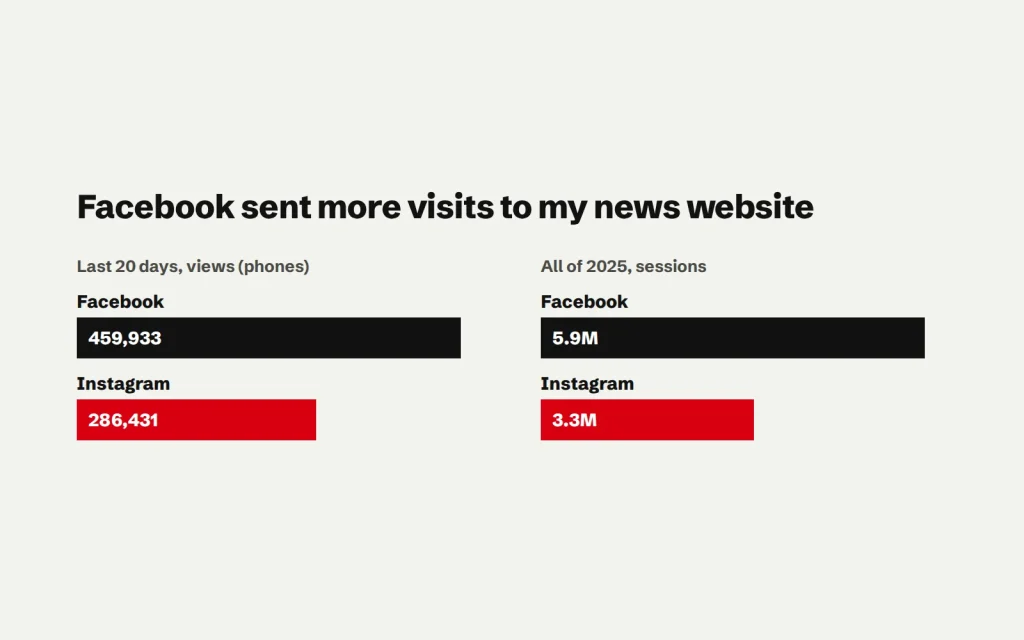
Facebook. In the last 20 days it sent my entertainment news website 459,933 views from phones, against 286,431 from Instagram: about 1.6 times as many. Over all of 2025 the gap was about 1.8 times, 5.9 million sessions from Facebook against 3.3 million from Instagram.
But Facebook only wins for me because I changed how I post there in November 2024. If you still share links on Facebook the way most pages did before that, you will not get numbers like these, and that mistake is the main thing this guide is about.
The numbers from my website
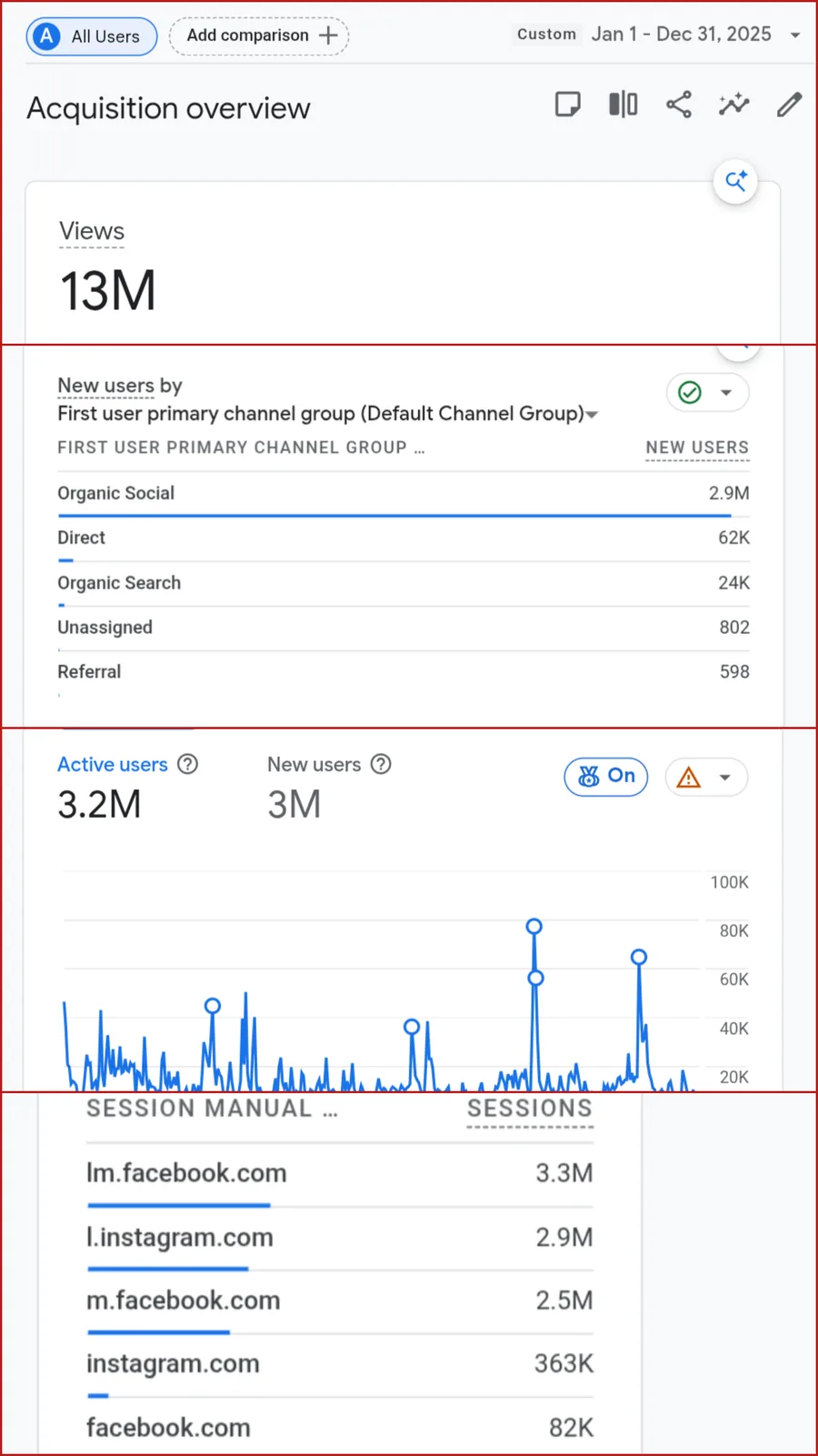
My site gets around 13 million views a year, and almost all of it comes from social media. In 2025, Google Analytics counted 13 million views and about 3 million new users, and 2.9 million of those new users came through social media. Search, direct visits and links from other sites together brought fewer than 100,000 of them.
Facebook arrives in Analytics under several names (facebook.com, lm.facebook.com, m.facebook.com, l.facebook.com), and Instagram under two (l.instagram.com and instagram.com). Add each platform’s names together and you get the totals above.
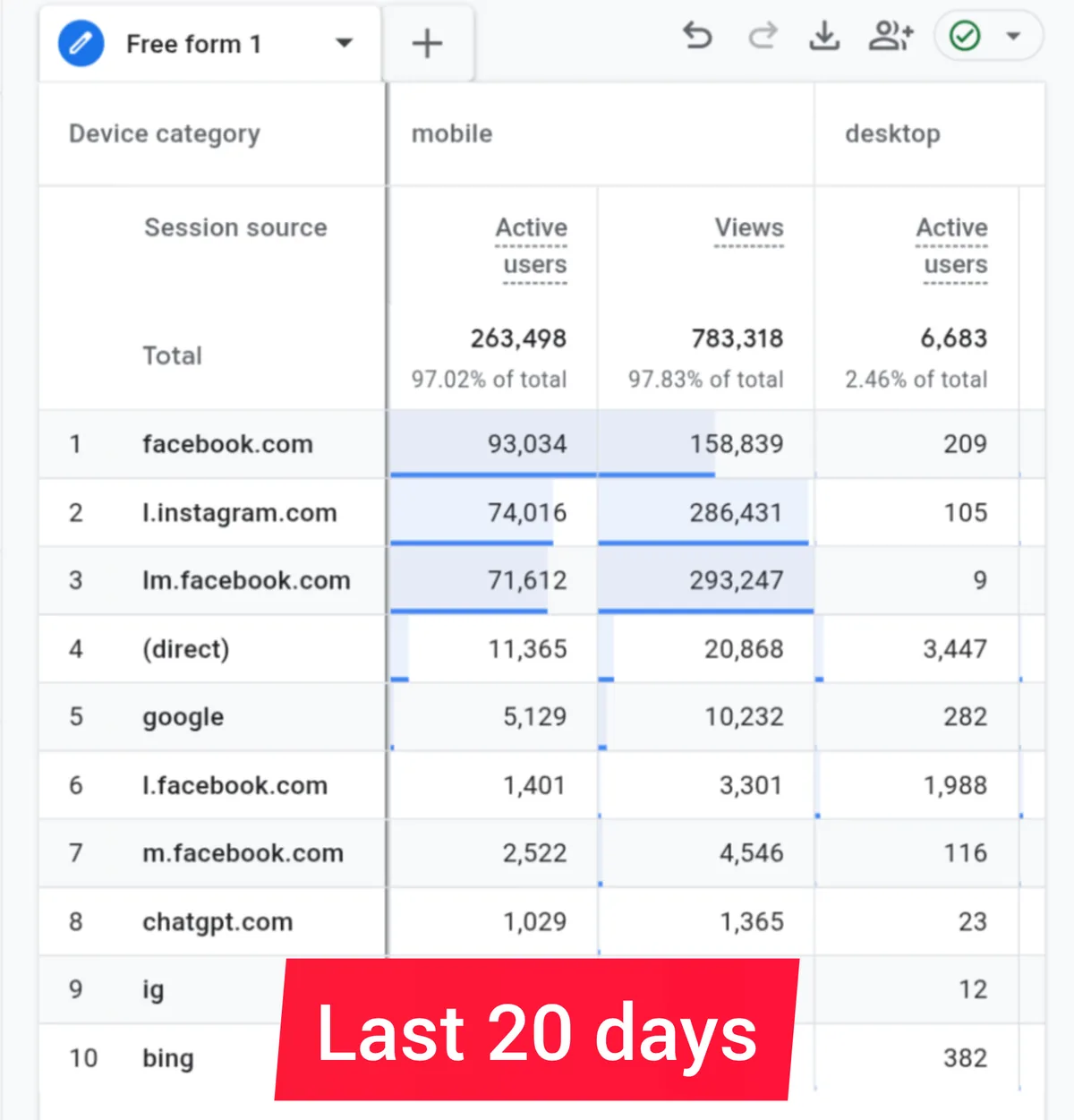
Instagram is far from weak here. A platform that sends close to 300,000 views in 20 days is worth the work. Facebook simply sends more.
How I get traffic from Instagram
On Instagram, people reach my articles in two ways, and I use both every day.
- Stories with the link inside. For every article I make a story image with its headline and put the article’s link in the story. That is around 15 to 20 stories a day, depending on how many articles I publish; some days fewer, some days more.
- One or two carousels a day. Each carousel holds 6 to 8 images, one for each article, and the caption invites people to read them through the stories or the link in bio.
Stories are where the clicks come from, and the carousels are what send people to the stories. Making 15 to 20 story images a day by hand is the job I built JOQ for: I paste the article’s link, the headline and photo come in, I pick the words for the box and save the story size.
What changed on Facebook in November 2024
For years the normal way to bring Facebook readers to a website was to post the link: the post showed the article’s preview, people tapped it, done. In November 2024 that stopped working on my pages. Posts with a link in them almost stopped getting reach, from one month to the next.
I had to find another way, and this is what I do now for every article:
- I post one photo of the article with its headline on it, made with JOQ like the Instagram images.
- In the caption I tell people the full story is in the first comment.
- I put the link in the first comment, not in the post.
Done this way, the post’s reach is not held back, and it works well. The Facebook numbers above come from pages that post this way.
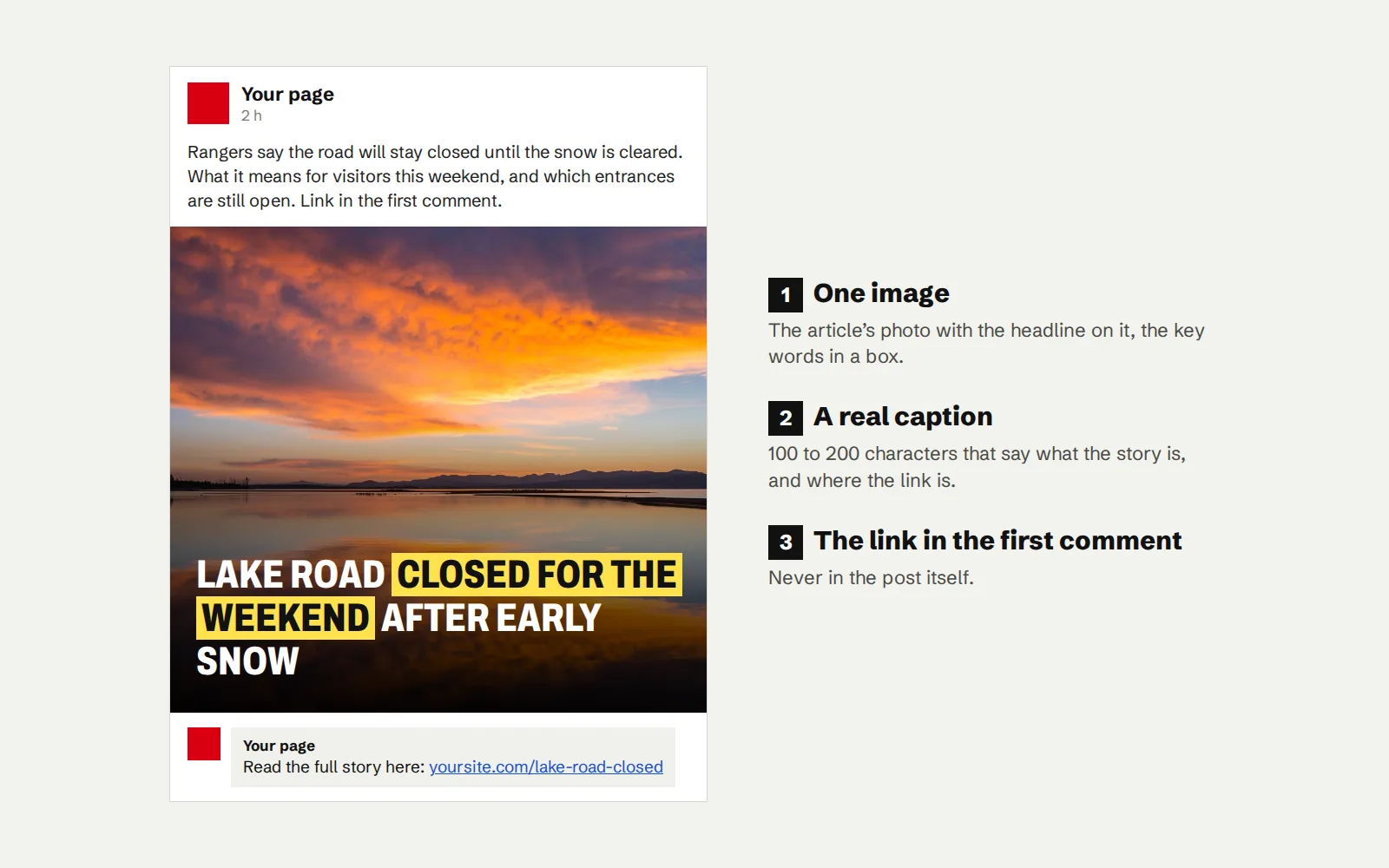
The mistake to avoid: links in the post
Do not post links directly on Facebook anymore. That way of working is old, and on my pages it is completely gone: since November 2024, posts with the link in them get almost no reach. If your goal is reach, and through reach more visits to your website, use the photo and the first comment.
What hurts on both, and more on Facebook
As in my other guides: do not post images with another source’s watermark, and do not post blurred images. Both cost reach on Instagram, but in my experience Facebook is stricter.
A watermark from another page shows that the image is someone else’s work, and Meta has said what happens to pages that keep posting other people’s work. In its July 2025 post on unoriginal content, Meta defines it as content that “reuses or repurposes another creator’s content repeatedly without crediting them”, and says pages that keep doing it lose access to monetization for a period and “receive reduced distribution on everything they share”. Not only the post with the watermark: everything.
Colours and captions
Red, yellow and green. These are the three colours I suggest you use most in your post designs, for the highlight box or the parts that should catch the eye. They are strong colours, and in our experience posts that use them get better numbers. In JOQ you set the highlight colour once and it stays for every post after.
A caption of 100 to 200 characters on Facebook. At least that much. Say what the story is about and that the link is in the first comment, so people know where to go.
If you only have time for one
Choose Facebook, done the new way: one photo with the headline, a real caption, the link in the first comment. That is what sends me the most visitors. If you have time for both, keep Instagram too, with stories that carry the link and a carousel or two a day pointing to them. Close to 300,000 views in 20 days is not something I would leave behind.