How I Write Instagram News Post Headlines That Stop the Scroll, and the One That Got 4 Times Less Reach
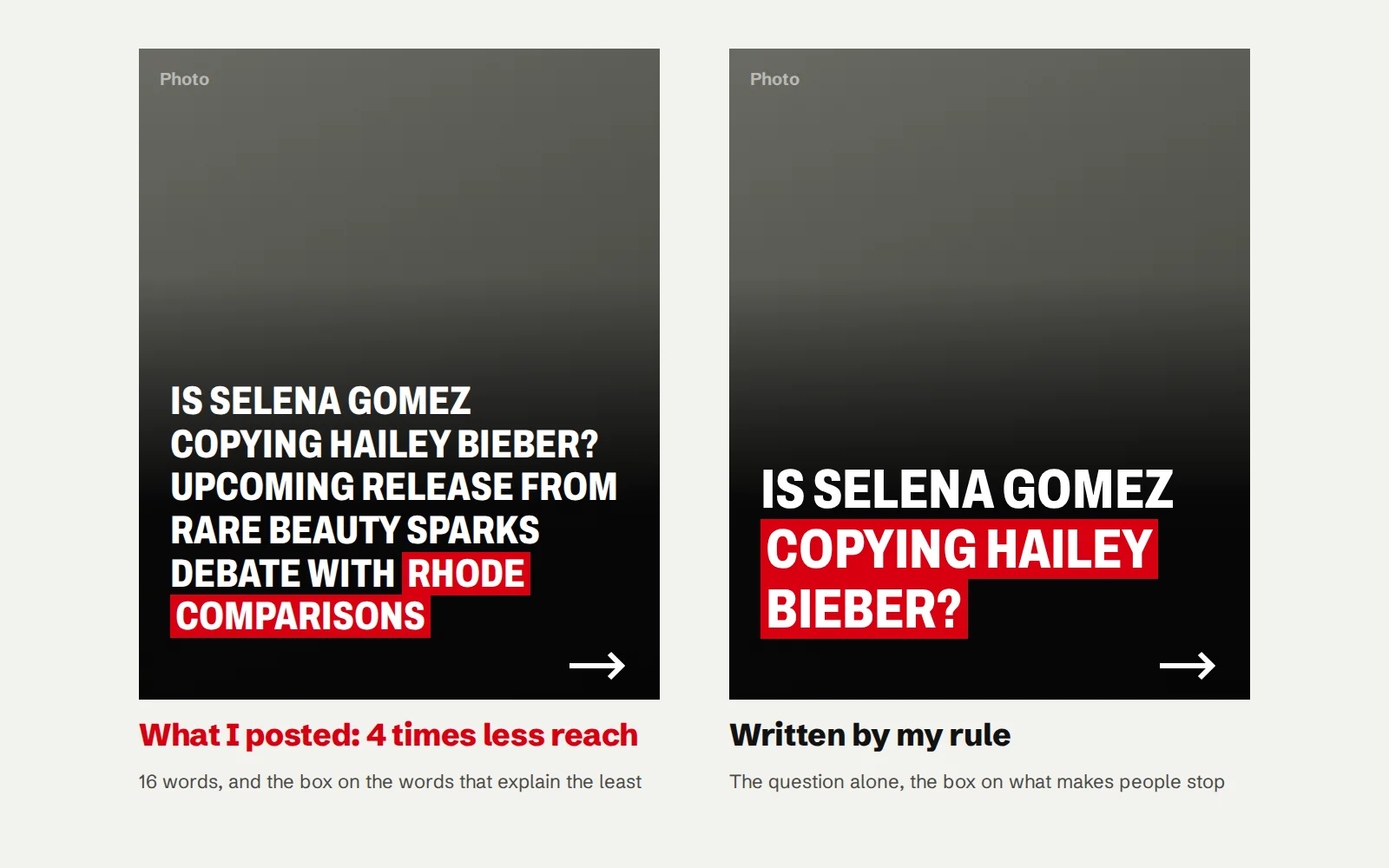
“Is Selena Gomez copying Hailey Bieber? Upcoming release from Rare Beauty sparks debate with Rhode comparisons.”
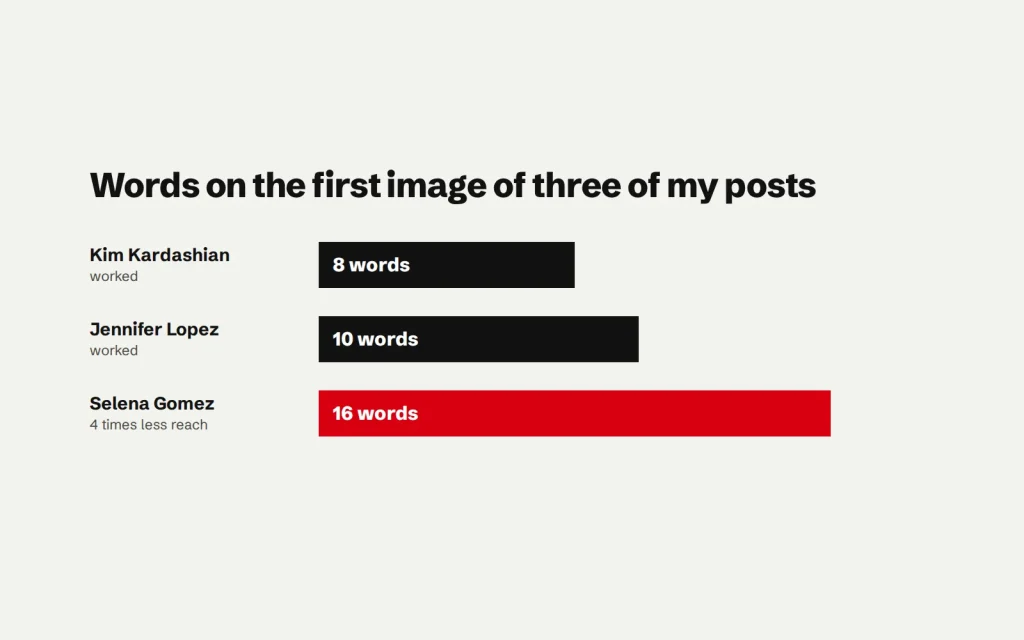
That is a headline I put on the first image of a carousel post on one of my Instagram entertainment pages. My headlines that worked reached 4 times as many people as this one. Reach also depends on the topic, the photo and the time of posting, so one post cannot prove a cause on its own. But this headline broke both rules I now treat as a must, and I am sure that had a real impact: it was too long, and I put the highlight box on the wrong words.
I have written headlines for news posts every day for more than six years, on three Instagram pages I grew without ads to 105,000, 56,000 and 180,000 followers. The clearest way I know to show what makes a headline work is to put a post that failed next to posts that worked. This guide does that, with three of my own.
What went wrong in the Selena Gomez headline
It was too long. Sixteen words on the first image. People decide in a moment whether to stop or keep scrolling, and sixteen words is not something anyone reads in a moment. With a headline that long, people lose interest before they get to the end. Long headlines have hurt my posts more than once, and this one was the longest of the three in this guide.
The highlight was on the wrong words. I put the box on “Rhode comparisons”. Rhode is Hailey Bieber’s beauty brand. Her fans know that, but many people scrolling past do not, and for them those words gave no reason to stop. The words that mattered were right there in the first line: “copying Hailey Bieber”. Two famous names and an accusation. Anyone who follows either of them understands it at once and wants to know more.
The rule I follow now
What matters most in a news post headline, from my experience, fits in three parts:
- Direct and short. The first image of the post says what happened, in as few words as the story allows. Not every headline can be tiny, but it should never be long.
- The main part goes in the box. Always. The highlighted words are the part of the story that makes someone stop. Usually it is the part nobody expects.
- An arrow pointing right. This one is my own habit, not a rule I can measure on its own: I put an arrow under the headline so people know the post continues. The rest of the story, and the photos of everyone in it, go on the next slides.
Two of my headlines show this better than any explanation.
Two headlines that worked
“Kim Kardashian reportedly crushing on 21-year-old English footballer”
Eight words. Not short, but not long either. The highlight is on “crushing on 21-year-old”, because that is the main part of the story. Kim Kardashian alone is not news. Kim Kardashian and a 21-year-old is.
Look at what the box does in someone’s head. They read it and think: wait a second, who is this 21-year-old footballer? The headline does not say his name, and it does not need to. The answer is one swipe away, on the next slide, with his photo. From what I have seen on my pages, a question like that is what makes people stop, and the swipe is what keeps them on the post.
“Jennifer spotted flying in economy amid financial hits from tour”
Ten words, and a headline that makes people curious. Here the box goes on “spotted flying in economy”. Jennifer Lopez is a multimillionaire. Nobody expects to see her in economy, so those four words are the hook. The rest of the line, the money trouble from the tour, explains it, and it does not need a box.
One thing in this headline only works because of the photo. “Jennifer” on its own could be anyone. On a post like this, the photo is what shows who she is, and that is what lets a first name be enough. Use a first name only when the photo makes the person obvious at a glance. If it does not, write the full name.
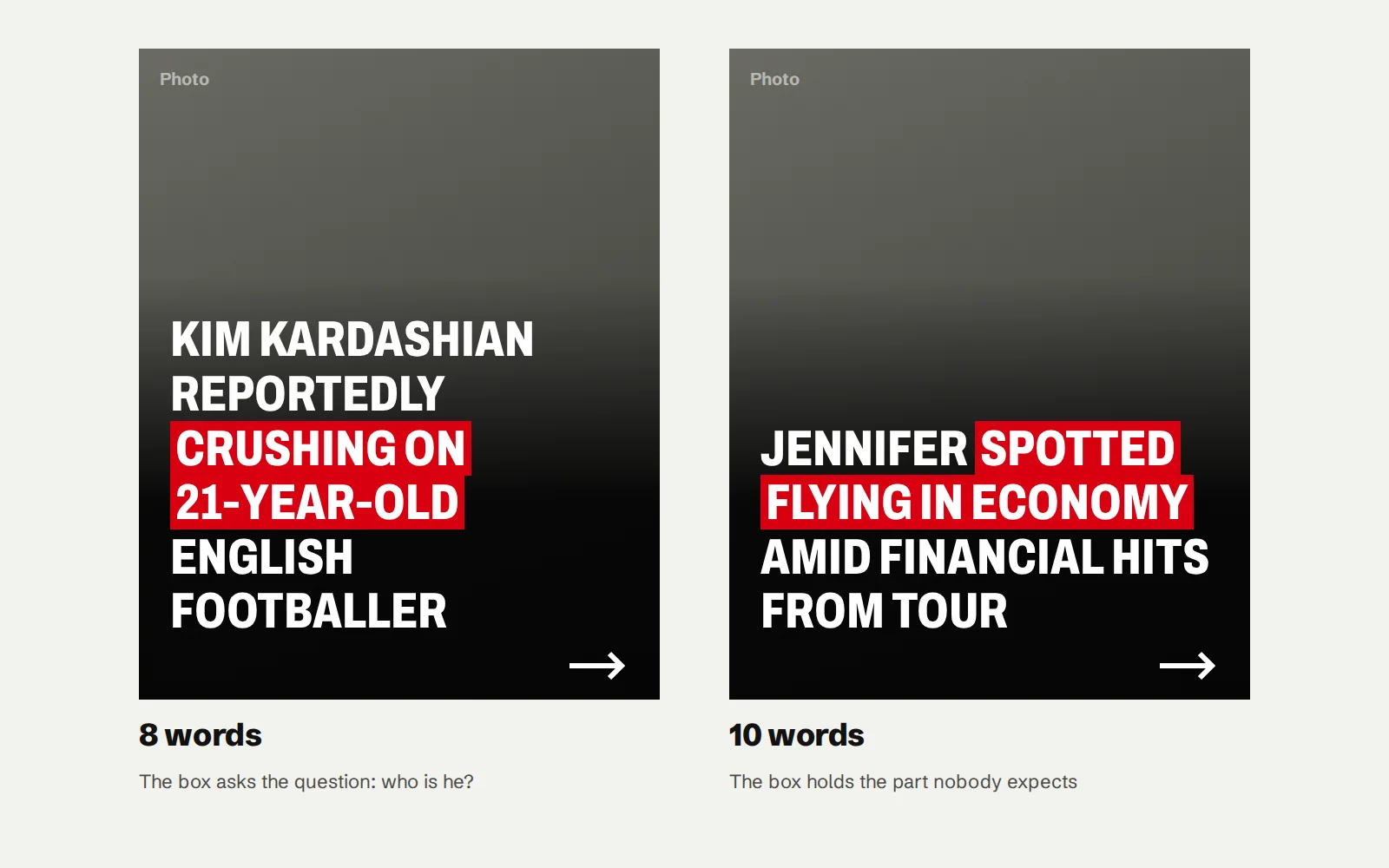
Put the three headlines side by side and the difference is plain. The two that worked had 8 and 10 words, and the box sat on the surprise. The one that failed had 16 words, and the box sat on a brand name that many people scrolling did not know.
A hook is not clickbait
Some people will read this and say it is clickbait. The difference matters. Clickbait promises something the post does not give, says something that is not true, or hides the main fact only to force a click or a swipe. What I aim for is curiosity without misleading anyone: the headline is true, it gives the main fact on the first image (Kim Kardashian, a 21-year-old footballer), and the box only points to the part worth looking at. When someone swipes to find out who the footballer is, the post tells them.
Keep it that way. The box should point to something true that the post then explains. And with gossip, say where it comes from: “reportedly” in the Kim Kardashian headline tells the reader this is a report, not a confirmed fact, and the slides after it should name who reported it. That is the line I do not cross.
Picking the words for the box
A simple test for the box: read the headline without the famous name and ask what is left that would surprise someone. In the Kim Kardashian headline it is the age. In the Jennifer Lopez one it is economy class. In the Selena Gomez one it is the word “copying”, not the brand at the end.
In my two headlines that worked, the box held three and four words. If you highlight half the headline, nothing stands out. In JOQ you type the headline and tap the words that go in the box, so you can try two or three choices in a few seconds and keep the one that reads best.
The Selena Gomez post, written again
If I had to post that story today, the first image would say only “Is Selena Gomez copying Hailey Bieber?”, with “copying Hailey Bieber?” in the box and an arrow under it. Rare Beauty, the upcoming release and the Rhode comparisons would all still be in the post, on the second slide and in the caption, where the people who swiped want to read them.
Try the same on your own last post that did badly. Count its words, find the surprise, and check whether the box is on it.